

The Boyfriend Bob Is Fall’s Most Wearable Reset
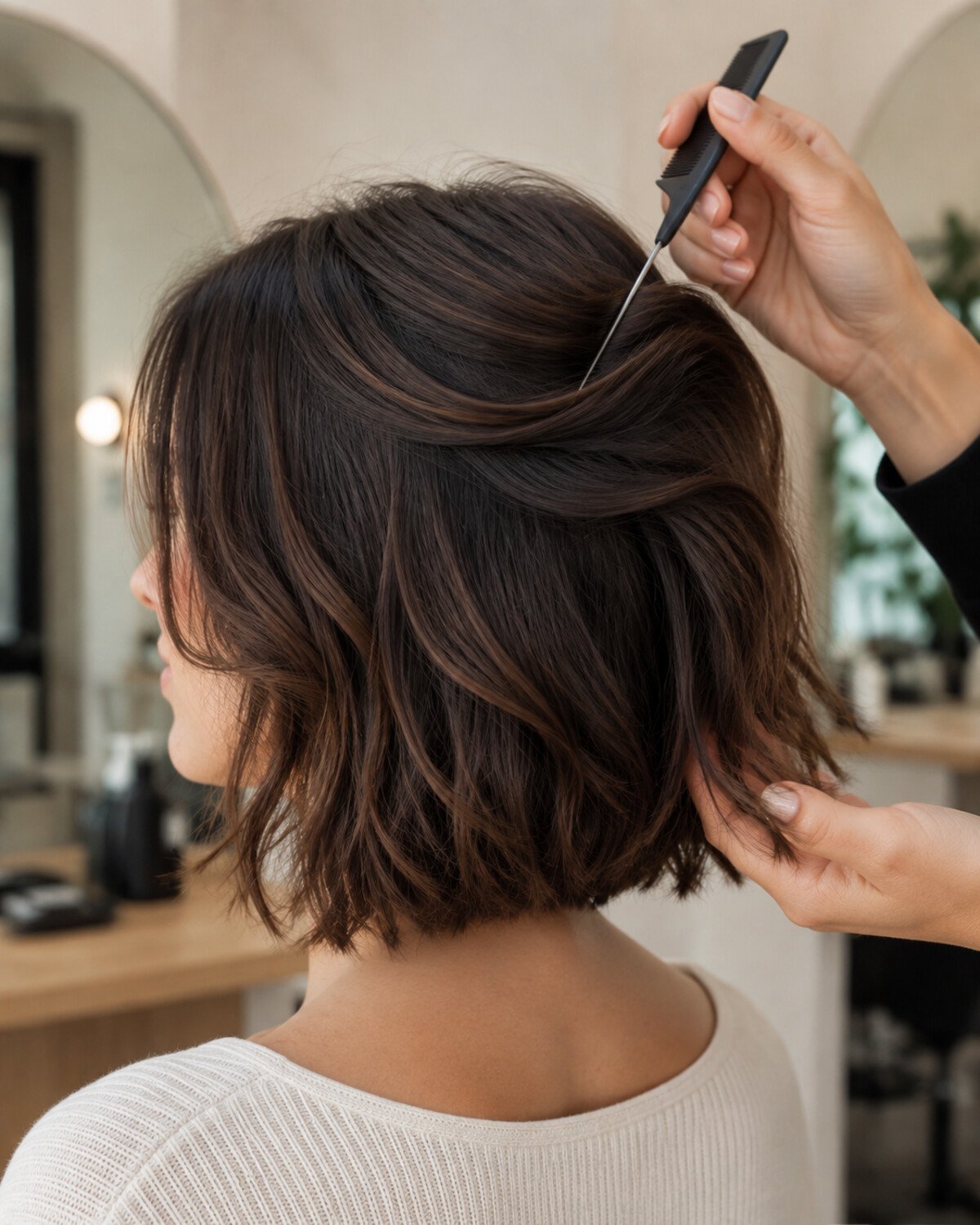
The bob remains one of 2026’s defining haircuts, but its latest evolution feels noticeably softer. Instead of a sharply geometric line or a highly styled blowout, the “boyfriend bob” sits between the chin and collarbone with relaxed layers, a touchable perimeter and enough length to tuck behind the ears.
That ease is precisely its appeal. It creates a visible transformation without requiring the wearer to adopt an entirely new styling personality.
The most convincing versions are not overly smooth or sculpted. They allow the natural bend of the hair to remain visible, with a few irregular ends and subtle movement around the face. The result can be air-dried, loosely waved or worn with a simple side tuck—and it still looks intentional.
The New Bob Is Soft, Not Severe
A modern boyfriend bob depends on proportion.
The front should feel long enough to frame the jaw without forming two heavy panels. Internal layers can release movement through the sides, while a softly broken perimeter prevents the ends from looking like one solid block.
Length alone, however, does not create this silhouette. Density through the lower third is what makes the shape appear balanced.
Someone growing out a shorter cut may have thinner areas around the front or sides. Fine hair can also lose visual weight as the perimeter is textured. In both cases, taking the haircut shorter may reveal gaps that were less noticeable when the hair was long.
Why Fullness Matters More Than Added Length
Extensions are often associated with dramatic length, but a bob transformation may require a much quieter approach.
The objective might be to support a lighter side, fill short layers or create a more consistent perimeter—not to make the hair visibly longer. A professional stylist can assess the client’s natural density, head shape and preferred part before deciding whether added hair is appropriate.
The finished line should not be perfectly uniform. Natural hair contains slight variations in weight and texture, so preserving some airiness through the ends usually feels more realistic than building an extremely dense edge.
Color matching also deserves more attention in a shorter style. Because the ends sit close to the face, even a subtle tonal difference can become visible. Comparing the natural hair and extension hair in daylight helps the stylist see warmth, depth and dimension more accurately.
Where Tape-Ins Can Support the Shape
TRESEVA Tape-In extensions are made from 100% Virgin Remy Hair with the cuticles aligned in the natural growth direction. The collection is intended for professional services involving length, volume and multidimensional color, including filling short layers or supporting grow-out transformations.
For a bob, placement should follow the haircut rather than dictate it. The stylist may work selectively in areas that need visual weight while preserving enough natural coverage for everyday movement.
Suitability and quantity depend on the individual client. A consultation should include how she tucks her hair, whether she switches her part and how frequently she wears the style straight, waved or air-dried.

Test the Bob in Real Life
Before leaving the salon, move the hair beyond its finished photo position. Tuck both sides behind the ears, shake out the layers and view the perimeter from the front, profile and back.
This movement test can reveal a heavy corner, a thin section or a color transition that disappears in a static photograph. It also shows whether the bob remains flattering without a highly controlled blowout.
At home, lightweight care and restrained styling help preserve the airy quality. Excessive oil or repeated passes with a hot tool can collapse the shape and make the hair appear more solid than intended.
The most modern boyfriend bob does not look freshly arranged every minute. It looks believable when worn—and that natural ease is where thoughtful cutting and discreet extension work meet.