
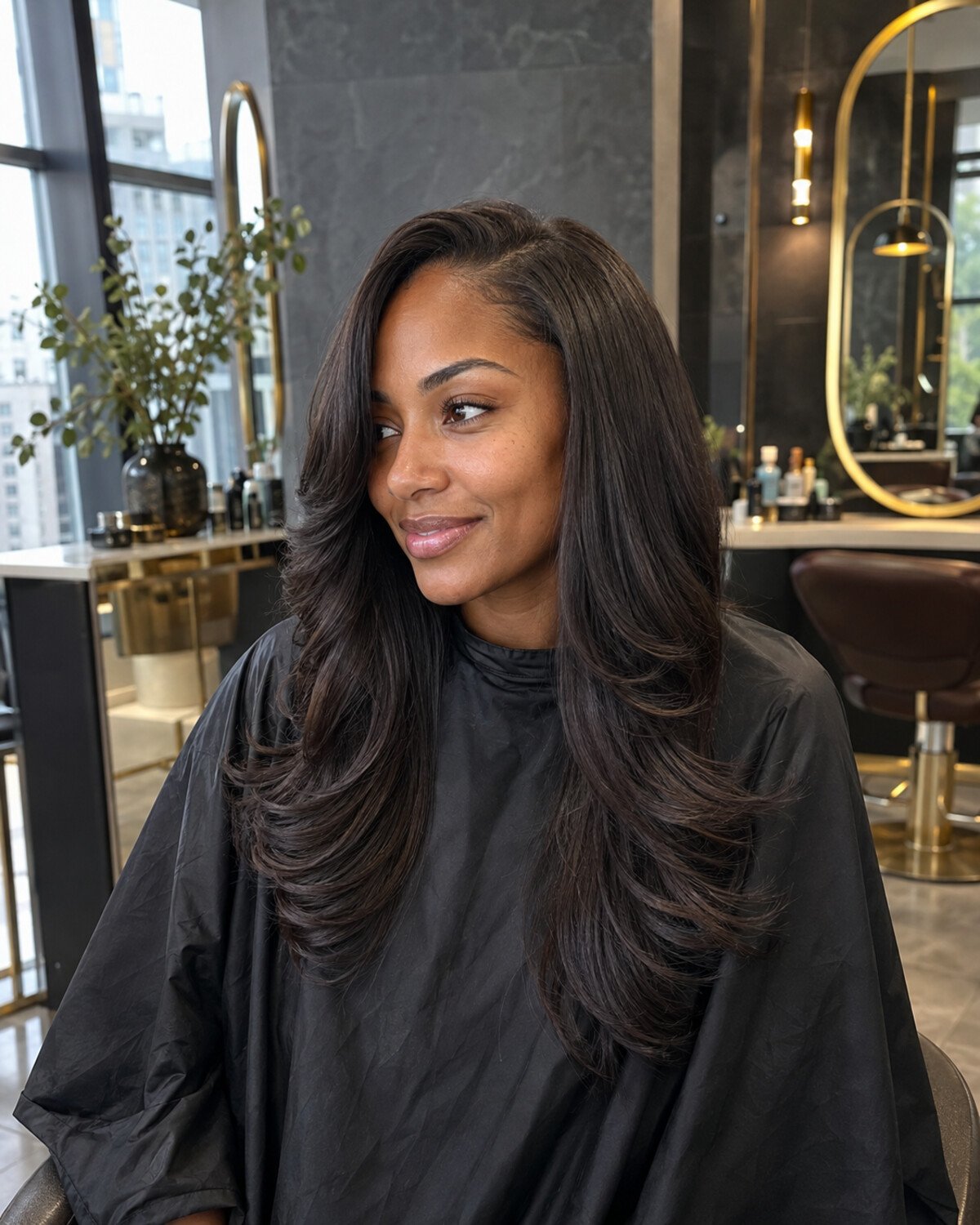
The Side Part Is Back—But the Installation Has to Move With It
The side part has returned to the center of the beauty conversation.
The 2026 version is usually less dramatic than its early-2000s predecessor. Instead of moving almost all the hair to one side, clients are choosing a slightly off-center part that creates volume, softens the front and offers an easy change from a familiar middle part.
For extension professionals, this is more than a finishing trend. If a client regularly switches between center and side parts, that preference should influence the consultation, coverage assessment and final shaping before the installation begins.
Treat Parting Preference as Essential Consultation Information
Do not ask only how the client wears her hair today. Ask how she wants to wear it over the next several weeks.
Useful consultation questions include:
- Do you alternate between center and side parts?
- Do you flip your part for additional volume?
- How often do you wear a low ponytail or bun?
- Do you tuck one or both sides behind your ears?
- Which areas feel exposed when your hair moves?
A client may arrive with a center part simply because that is how the hair dried that morning. Watching her recreate her usual styles provides more useful information than evaluating one static position.
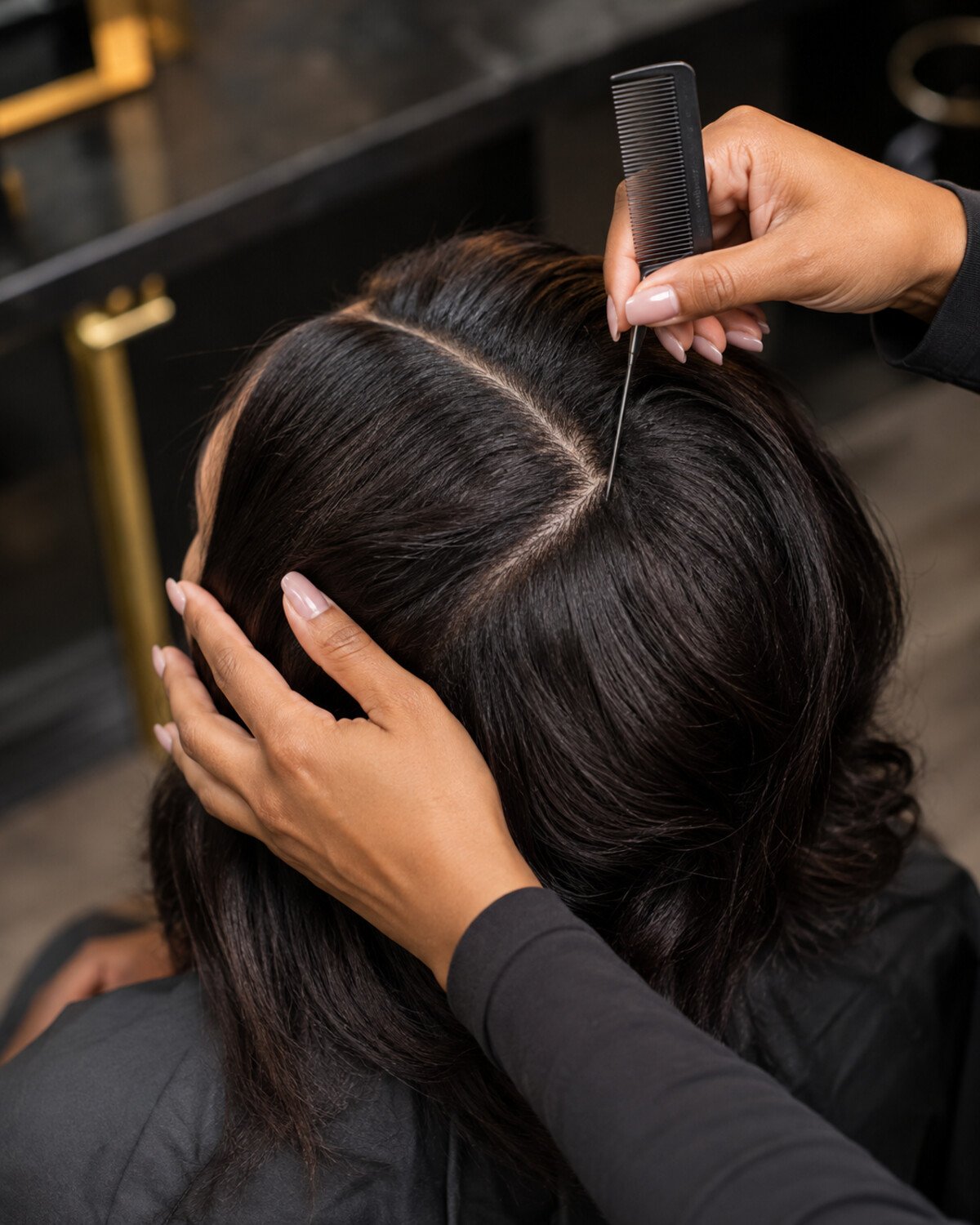
Map the Mobile Zone Before Planning the Rows
The visible part, crown and upper perimeter form a mobile coverage zone. Hair in this area changes direction when the client flips her part, tucks it back or gathers it into a ponytail.
Assess natural density from several angles and observe how the hair separates without forcing it into a perfectly controlled line. A placement that disappears under a middle part may become more noticeable when the hair is swept to one side.
The chosen method must suit the client’s density, head shape and styling habits. TRESEVA Butterfly Weft uses an ultra-flat, flexible PU base with strategically placed butterfly holes. According to TRESEVA’s product information, it is installed with silicone-lined microbeads and does not require sewing, glue or tape.
Method-specific placement should be performed by trained professionals following the relevant education and an individual client assessment. The product format can support a discreet result, but thoughtful planning is what makes that result versatile.
Cut for More Than One Direction
Once the installation is complete, check the haircut with the hair parted both ways.
Face-framing layers that look balanced around a center part may become heavy on one side after the part moves. Soft internal layering can redistribute visual weight while preserving the density through the perimeter.
The objective is not to create identical symmetry in every position. It is to make each position feel intentional.
A modern side sweep should connect naturally into the front layers instead of appearing as a separate curtain of extension hair. Dry shaping and movement checks are particularly valuable because they reveal where the natural hair ends and the added length begins.
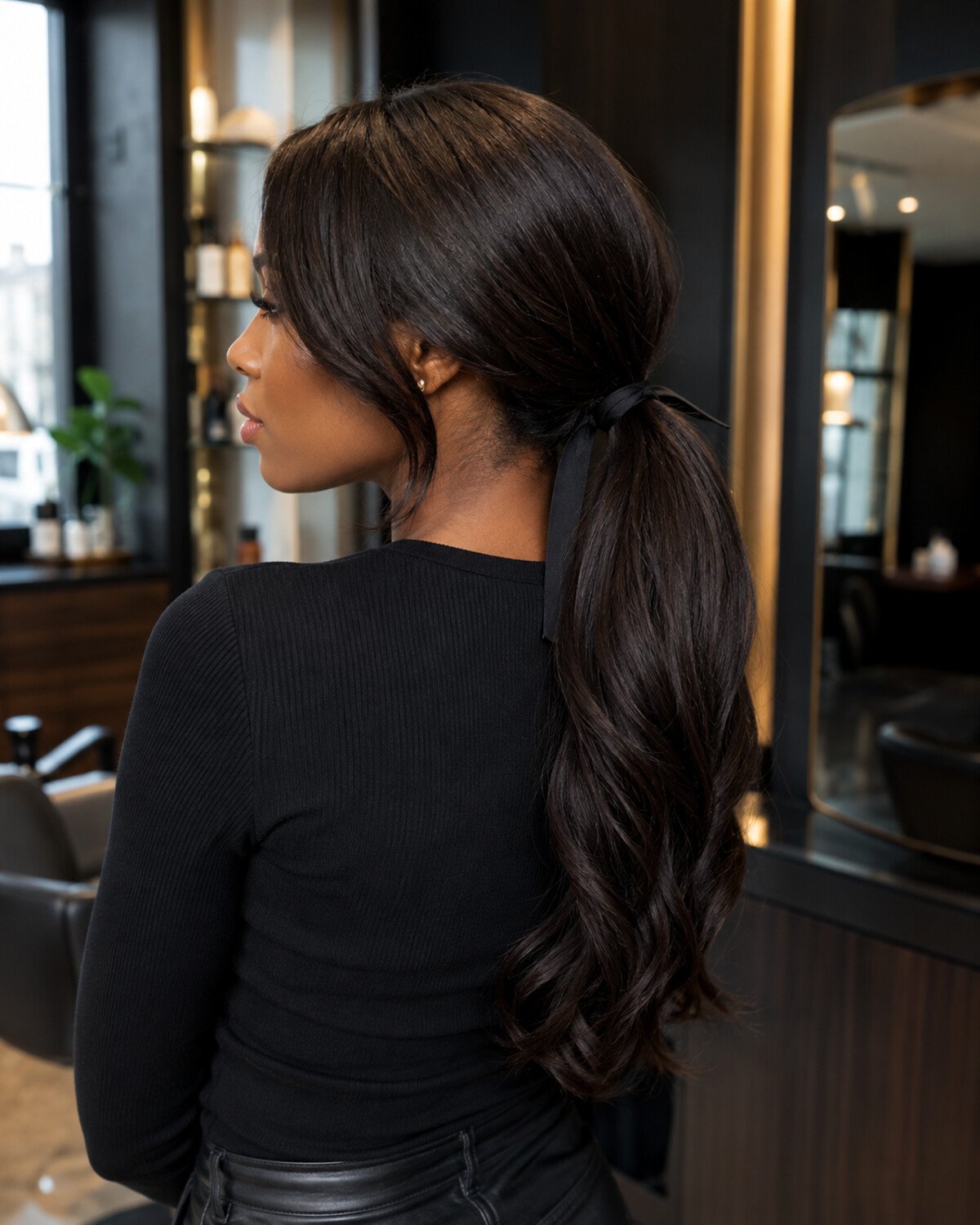
Test the Result in Three Real Styles
Before completing the appointment, evaluate the hair in:
- The client’s preferred loose style
- Her alternate parting
- A relaxed low ponytail or low bun
Look at the crown, temples, area behind the ears and nape. The client should be able to move naturally without being instructed to keep every strand in one carefully arranged position.
This final check also creates stronger portfolio content. Photographing the same result loose, side-parted and tied back communicates professional planning more effectively than three nearly identical curled-hair photographs.
An invisible installation is valuable. An installation that remains discreet while the client changes her style is even more useful.