
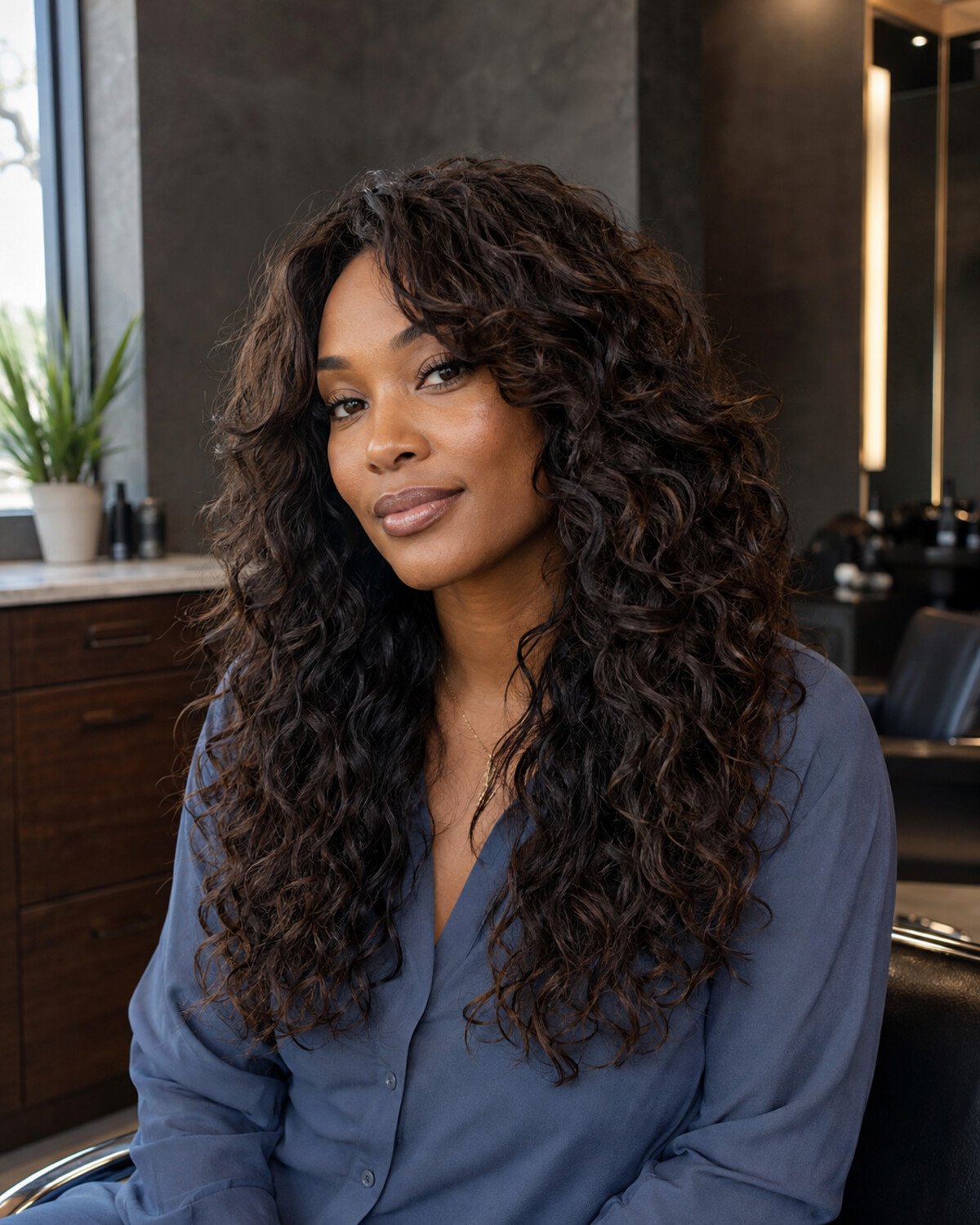
Texture Matching Is the New Color Matching
Natural curls, lived-in waves and soft shag silhouettes are shaping the current hair conversation. Clients are increasingly interested in movement that feels personal rather than a finish in which every curl has been made identical.
For extension professionals, that shift changes the consultation. A close color match can still look disconnected if the added hair behaves differently from the client’s natural texture.
The stylist must consider more than the curl visible in an inspiration photograph. Spring, strand diameter, density, shrinkage and the client’s normal styling routine all influence whether the final result moves as one head of hair.
Begin With a Movement Map
Assess the client’s hair when it is dry and close to its everyday condition. Wetting or stretching the hair too early can hide differences between the crown, sides, nape and front hairline.
Observe where the pattern becomes tighter, where it relaxes and which sections naturally expand as they dry. Many clients have several curl or wave patterns rather than one consistent texture.
Ask how the hair is usually styled:
- Is it air-dried or diffused?
- Does the client stretch the roots?
- How much shrinkage occurs between wet and dry?
- Does she regularly wear the hair straight?
- Which areas lose definition first?
These answers help determine whether the proposed service can support her real routine—not only the salon finish.
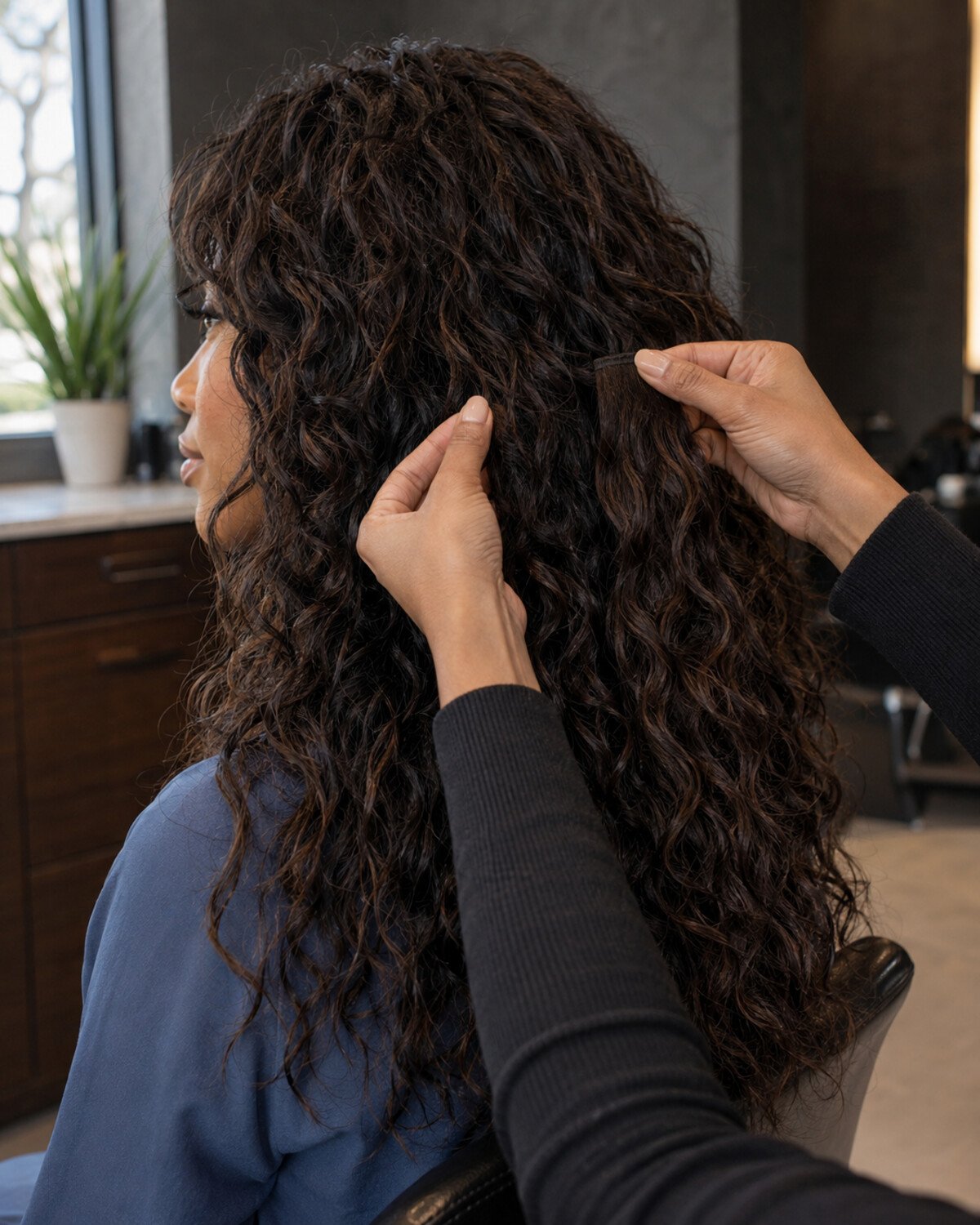
Match Behavior, Not Just Appearance
Two sections can share the same color and still respond differently to water, product and tension. One may form a tighter curl, while the other falls into a longer wave. One may have a soft matte surface, while the other reflects noticeably more light.
Before installation, compare the natural and added hair without overloading either with styling product. Look at how the sections separate, how quickly they return after being gently extended and how their ends settle.
The aim is not artificial uniformity. A small amount of variation can make the result more believable, particularly in a shag-inspired shape. The difference becomes distracting only when one area behaves like an entirely separate texture.
Color dimension should also follow the movement. Fine tonal variation placed through selected curls can reveal the layers, while one flat dark shade may cause the entire shape to appear visually heavy.
Let Placement Respect Spring and Weight
TRESEVA Genius Weft is described as an ultra-thin, lightweight weft that lays flat and can be cut for customized rows without shedding. Its installation does not use glue or tape.
That customizable format can support considered row planning, but the method itself does not replace a density and coverage assessment. Placement, row width and quantity must reflect the client’s head shape, natural hair and intended styling routine.
Avoid concentrating unnecessary weight in an area where the natural texture needs freedom to expand. At the same time, removing too much density through the lower lengths can create a top-heavy shag that loses balance when dry.
Installation should be completed by a trained professional using method-appropriate education and an individual consultation.
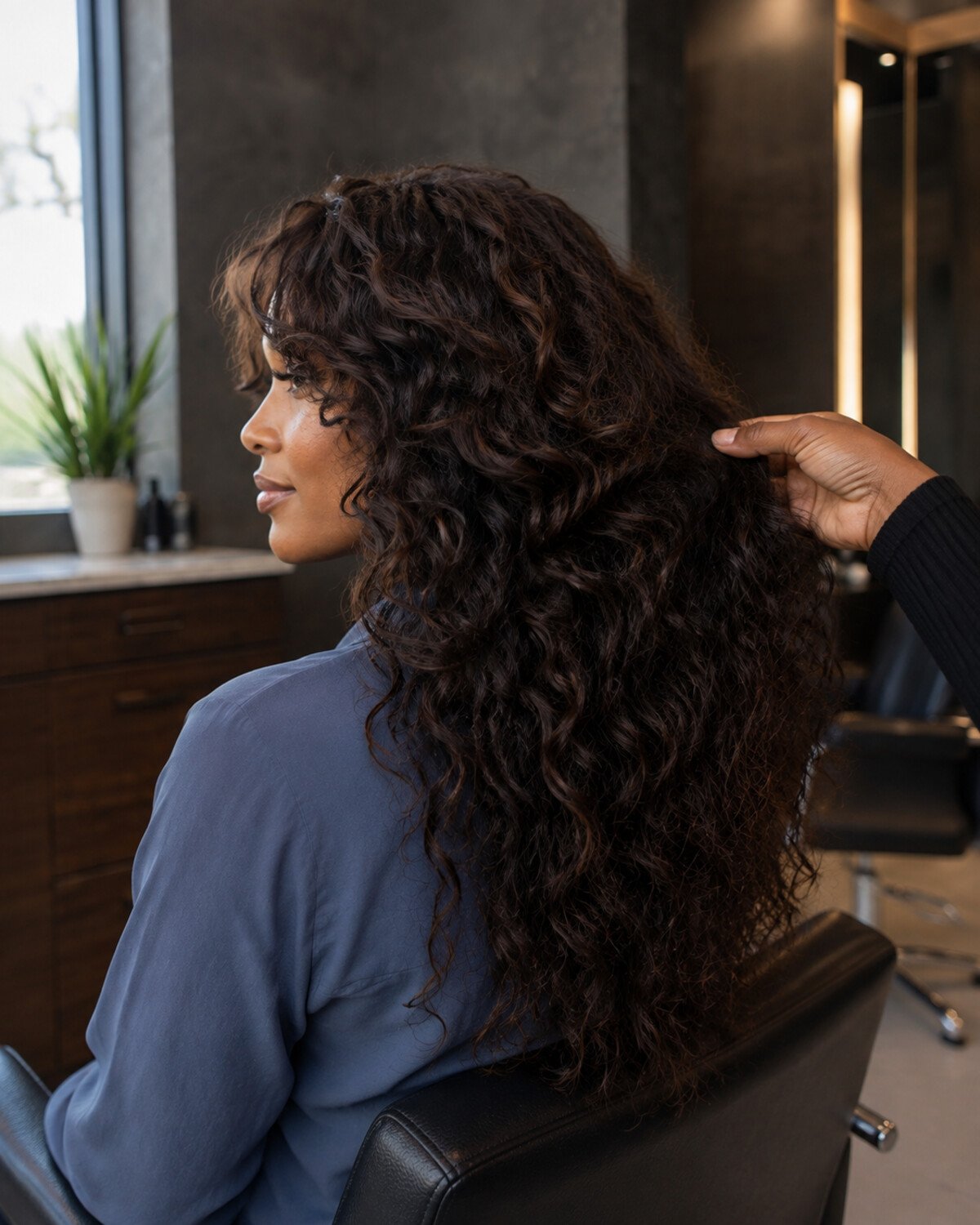
Dry Blending Reveals the Real Result
The final shape should be evaluated after the hair has settled into its intended dry texture.
Current soft shags often use shorter movement around the face and crown while preserving length and weight toward the back. Check how the layers connect without pulling each curl straight. Cutting solely by stretched length can produce unexpected gaps after the pattern rebounds.
Separate several curl groups with the fingers and watch how they fall back together. View the result from the front, profile and back, then ask the client to move her head naturally.
For portfolio photography, capture the complete silhouette, a texture close-up and a movement frame. Avoid coating the hair in excessive shine simply to make the image appear polished; individual strands and slight frizz often communicate the quality of the blending more honestly.
A refined extension service should respect the client’s texture rather than disguise it. That is where premium hair, careful assessment and stylist craft become visible.