
Quiet Silver Changes the Extension Consultation
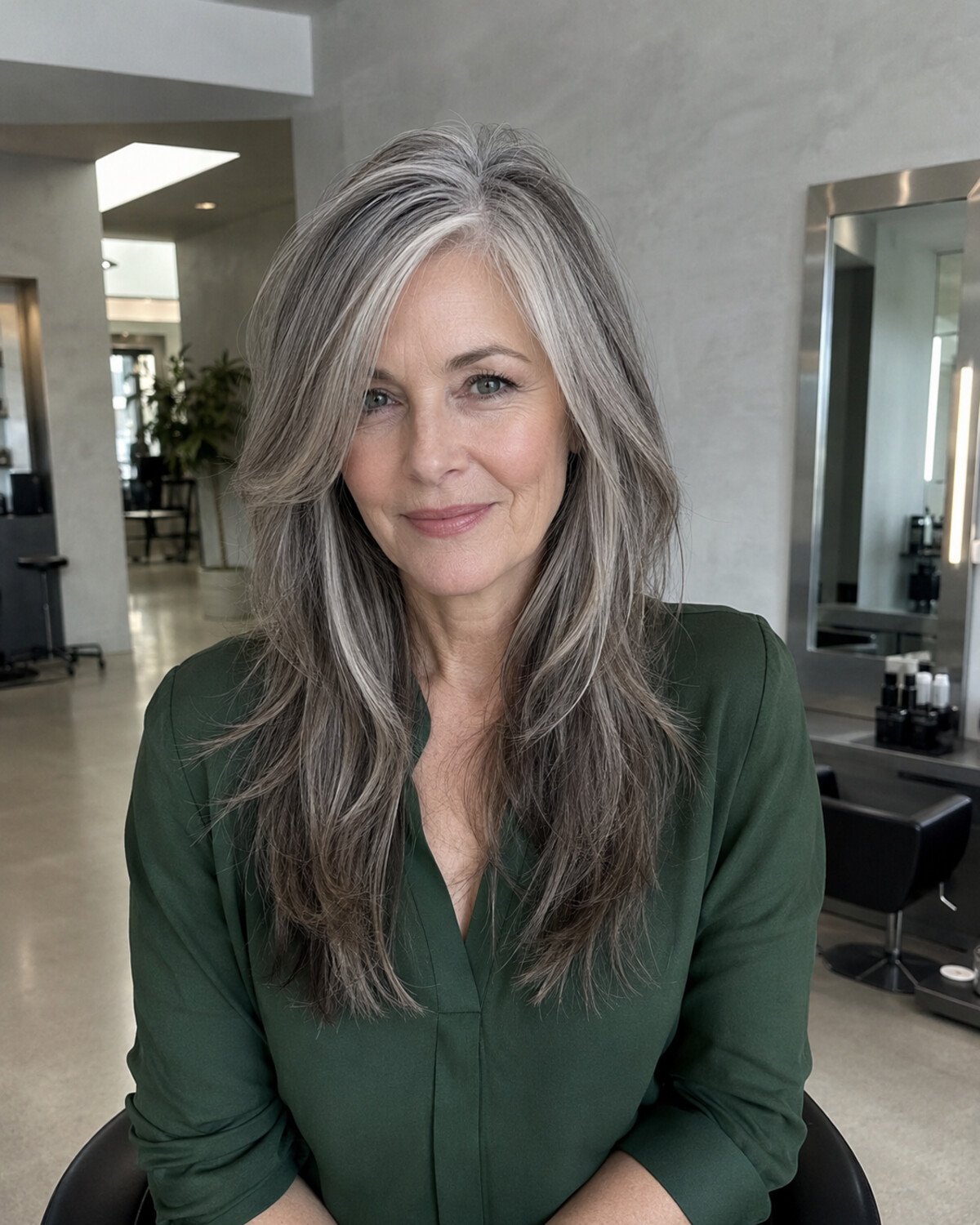
“Quiet silver” reflects a wider move away from automatically covering every gray strand. Instead, colorists are integrating natural silver with highlights, lowlights and softened base tones to create a multidimensional transition.
For extension professionals, this introduces a specific challenge: the client may not have one dominant shade.
Silver can be concentrated at the temples, brighter along the hairline, dispersed through the crown and nearly absent underneath. Matching the entire head to one gray or brunette swatch may flatten this natural pattern and create an obvious difference between the roots and added lengths.
A successful consultation therefore needs to map where each tone lives.
Divide the Hair Into Color Zones
Begin with clean, dry hair in neutral daylight and assess at least four areas:
- Hairline and temples
- Visible part and crown
- Interior depth
- Mid-lengths and ends
Do not assume that the brightest silver at the front represents the complete color story. The interior may still contain substantial brunette depth, while previously colored ends may appear warmer or more porous.
Ask whether the client wants to enhance her silver, soften it or maintain a predominantly brunette impression. “Gray blending” can describe very different outcomes, so photographic references should show the front, back and root area—not simply one finished portrait.
Density must be assessed separately from color. Mature hair can vary considerably between zones, and the lightest silver strands may also appear more visually transparent against the scalp.
Match the Pattern, Not the Brightest Strand
A useful extension blend may require several related tones.
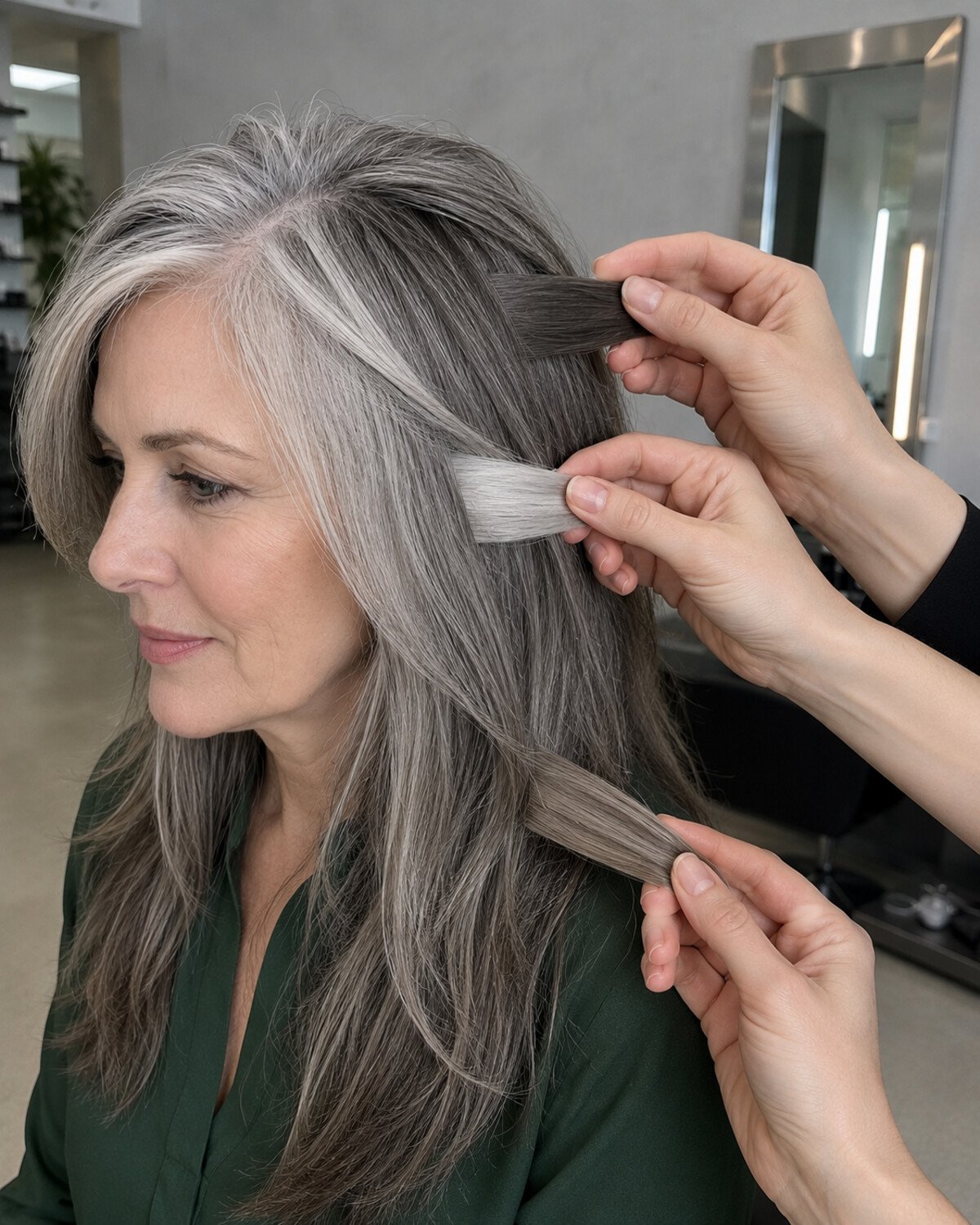
Charcoal or muted brunette can preserve interior depth. Soft silver-gray may connect with the temple and crown. Smoky beige can help bridge natural gray with warmer or previously colored lengths. The exact combination depends on the individual client; these are color roles, not universal formulas.
Hold each swatch beside the area it is intended to support. Then step back. A match that appears correct at close range may form an obvious stripe when viewed across the entire silhouette.
Avoid choosing extension hair under warm spotlights alone. Warm light can make silver appear beige and cause a stylist to select a tone that looks too yellow in daylight.
TRESEVA provides professional color rings and checks color batches against its official color system under standardized lighting. Its extension range includes brunette, blonde, balayage, ombré, rooted and dimensional color families. These tools support the consultation, but visual judgment across multiple zones remains essential.
Respect the Client’s Existing Dimension
Current gray-blending techniques work with irregular silver distribution rather than creating one opaque color block. Extension placement should follow the same philosophy.
Do not add an equal amount of the lightest tone through every row simply because silver is visible at the crown. Too much pale hair underneath can disconnect the lengths from the client’s remaining brunette base.
Likewise, adding only dark hair may create visual weight below a softly silver crown. Alternating related tones in proportions informed by the client’s pattern can produce a transition that feels more intentional.
The installation method should be selected only after evaluating natural density, scalp coverage, lifestyle and maintenance expectations. Mature hair is not one uniform category, and age alone should never determine the method.
Audit the Result Without a Styled Disguise
After installation and blending, examine the result before adding strong curls or excessive shine.
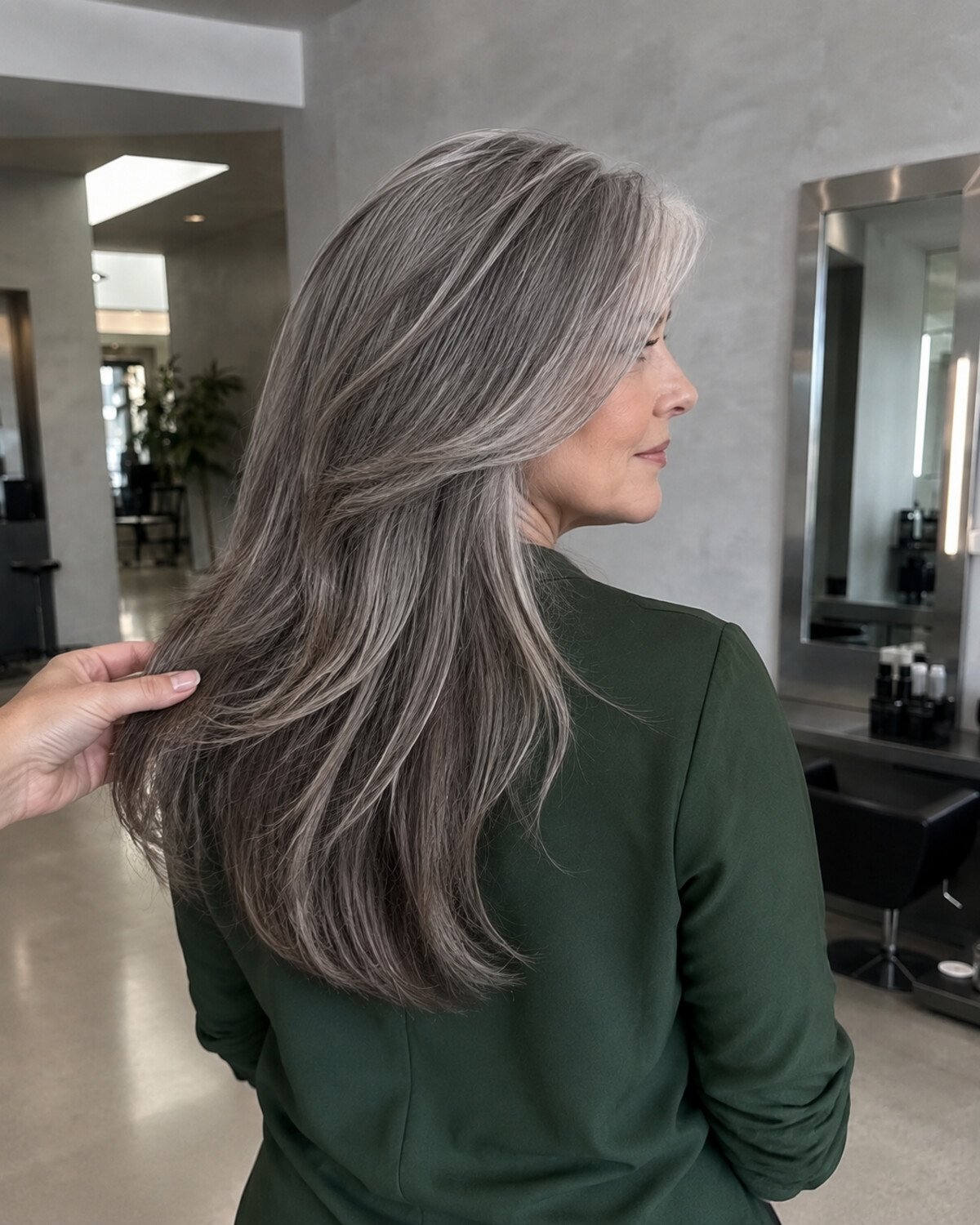
Move the hair from side to side and look for repeating light stripes, overly dark panels or a sudden change in density. Check the crown-to-length transition from the back, then return to the temples and face frame.
A satin-matte finish is particularly useful during this audit because intense gloss can visually merge separate tones. Individual silver and brunette strands should remain readable while still belonging to one overall palette.
Photograph the result in neutral daylight from the front, temple and back. These images provide more useful documentation for future color matching than a single curled final photograph.
Quiet silver succeeds when the client’s natural pattern remains recognisable. The stylist’s craft lies in extending that pattern—not replacing it.