
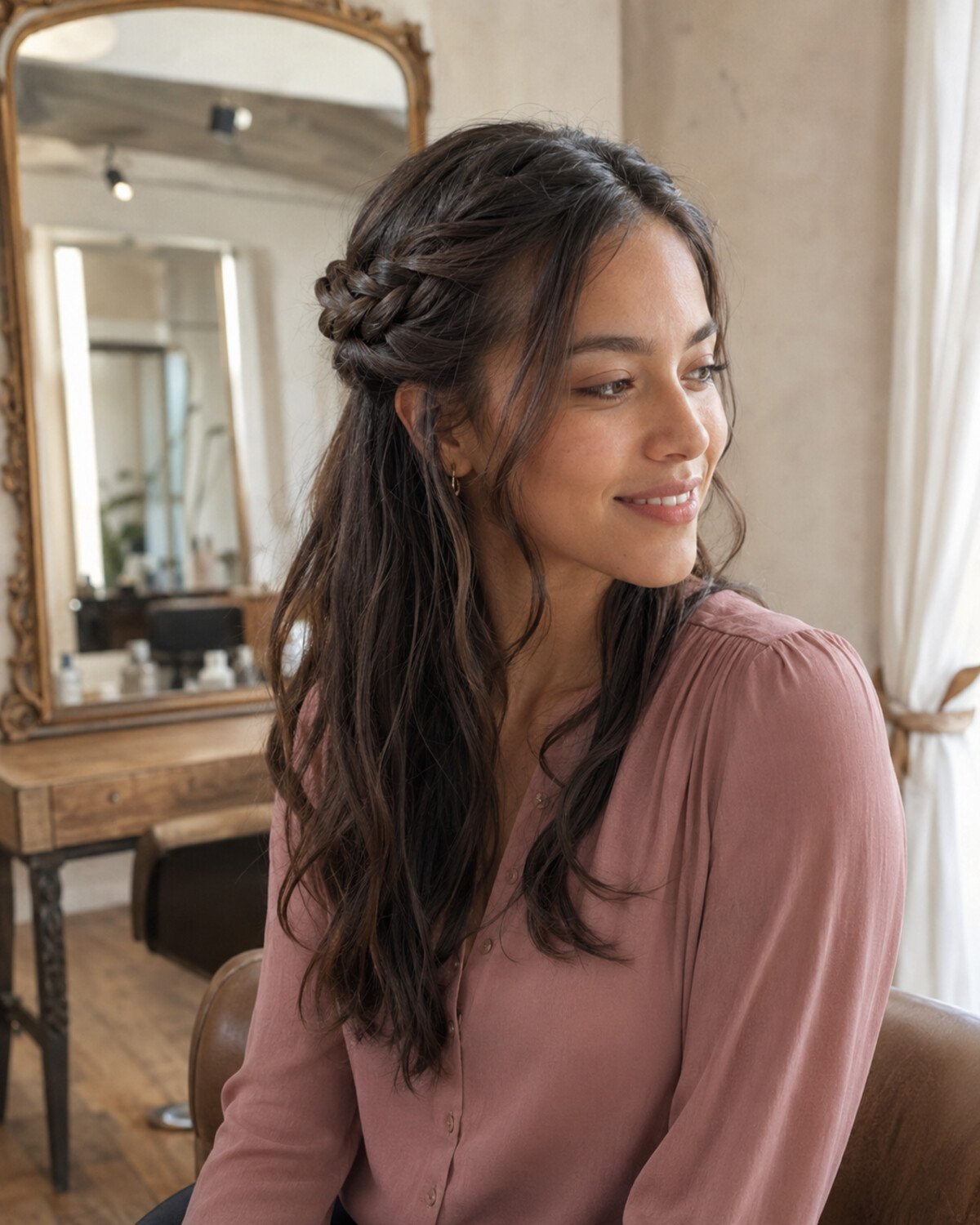
The Halo Braid Has Lost Its Festival Costume
Crown and halo braids are returning to Western beauty, but the new version feels far removed from the highly symmetrical, flower-covered styles of the 2010s.
Today’s halo braid is softer, less controlled and easier to wear with everyday clothes. Rather than pulling every strand tightly away from the face, it leaves a few natural pieces around the temples and allows subtle flyaways to remain visible.
The half-up interpretation is particularly wearable. A braid crosses the crown while the remaining length stays loose, combining a recognisable transformation with natural movement. It can work with midi-length hair as well as longer styles, making it an appealing option for anyone who wants a romantic change without committing to a new cut or color.
Choose Softness Over Symmetry
A modern halo braid should not look as though every section was measured.
Slight differences in width make the braid feel more organic. The two sides do not need to mirror each other precisely, and the loose lengths can retain their natural bend rather than being shaped into identical curls.
The front is equally important. Leaving a narrow area around the hairline relaxed can prevent the style from appearing severe. Your stylist can decide which pieces should remain free based on your natural growth pattern and face shape.
Hair with a little texture is generally easier to braid than freshly washed, extremely slippery hair. However, adding too much grip product can make darker hair look dusty and blonde hair appear dull. The aim is controlled texture—not stiffness.
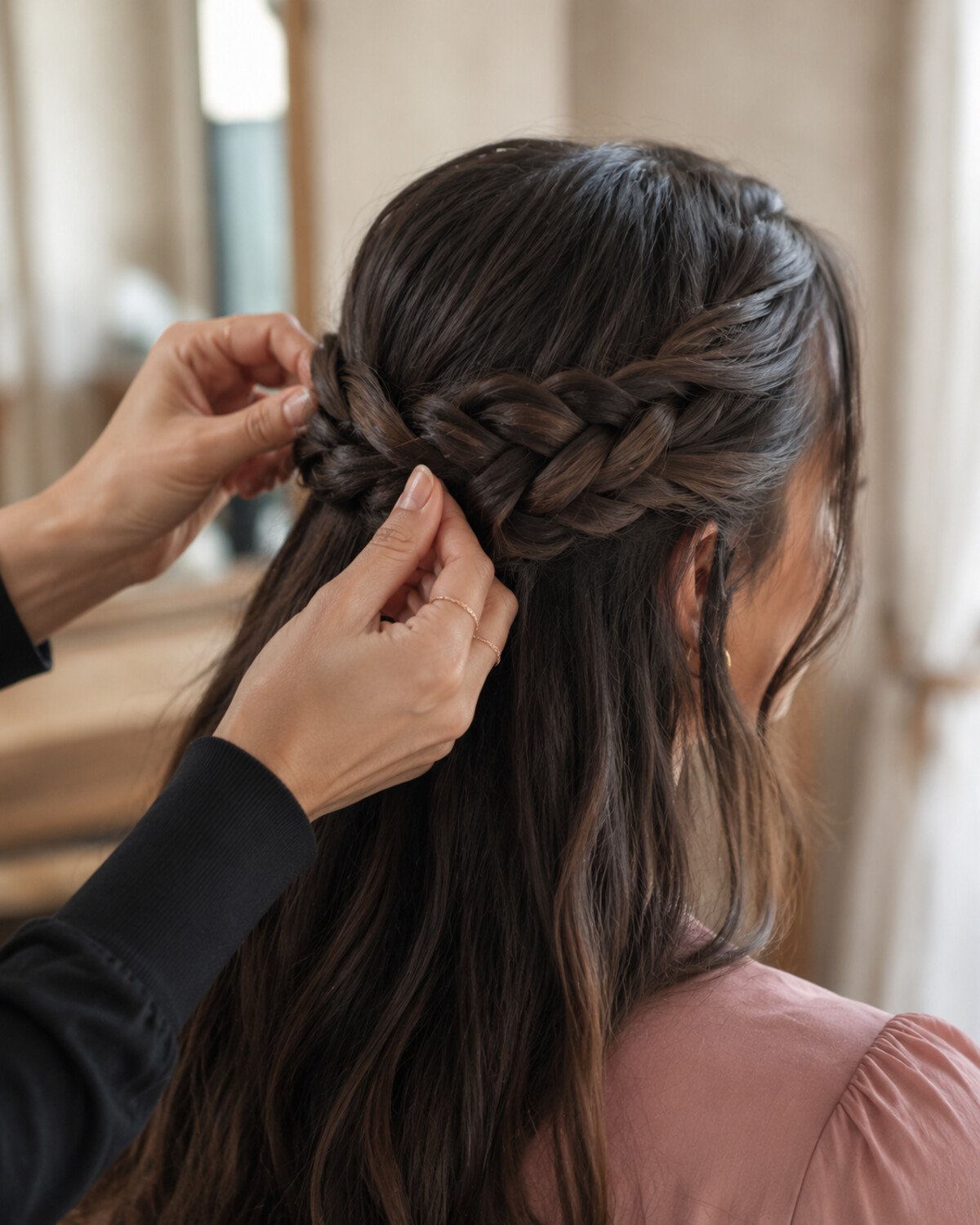
Fullness Should Come From Sectioning, Not Pulling
Pulling aggressively on a finished braid may create temporary width, but it can also expose uneven sections or make the style unstable.
A more believable result begins with consistent sectioning and comfortable tension. The stylist can then loosen only the outer edges while supporting the centre of the braid. This technique reveals individual strands and creates width without turning the braid into an oversized rope.
If the natural hair is heavily layered, shorter pieces may need to be incorporated gradually rather than forced into one large section. A half-up halo can be especially useful because it does not require every layer at the nape to reach the crown.
Color dimension becomes highly visible in braided styles. Fine taupe, brunette or softly contrasting ribbons can reveal the structure of each woven section, while one flat shade may cause the detail to disappear in photographs.
Can Extensions Support a Halo Braid?
Extensions can help when the goal is additional length or fullness through the loose portion of the style, but placement must be planned around the braid.
Attachment areas should remain covered as the hair is lifted, divided and turned. For temporary transformations, TRESEVA Clip-In extensions provide an option for adding length and volume without a semi-permanent installation. A stylist should assess where the pieces can sit discreetly and whether the client has enough natural coverage.
The goal is not necessarily to make the braid itself dramatically thicker. Supporting the loose lengths can balance the complete silhouette while allowing the crown detail to remain delicate.
For installed extensions, tell your stylist which method you wear before the styling appointment. The braid should work with the installation rather than placing unnecessary tension across attachment areas.
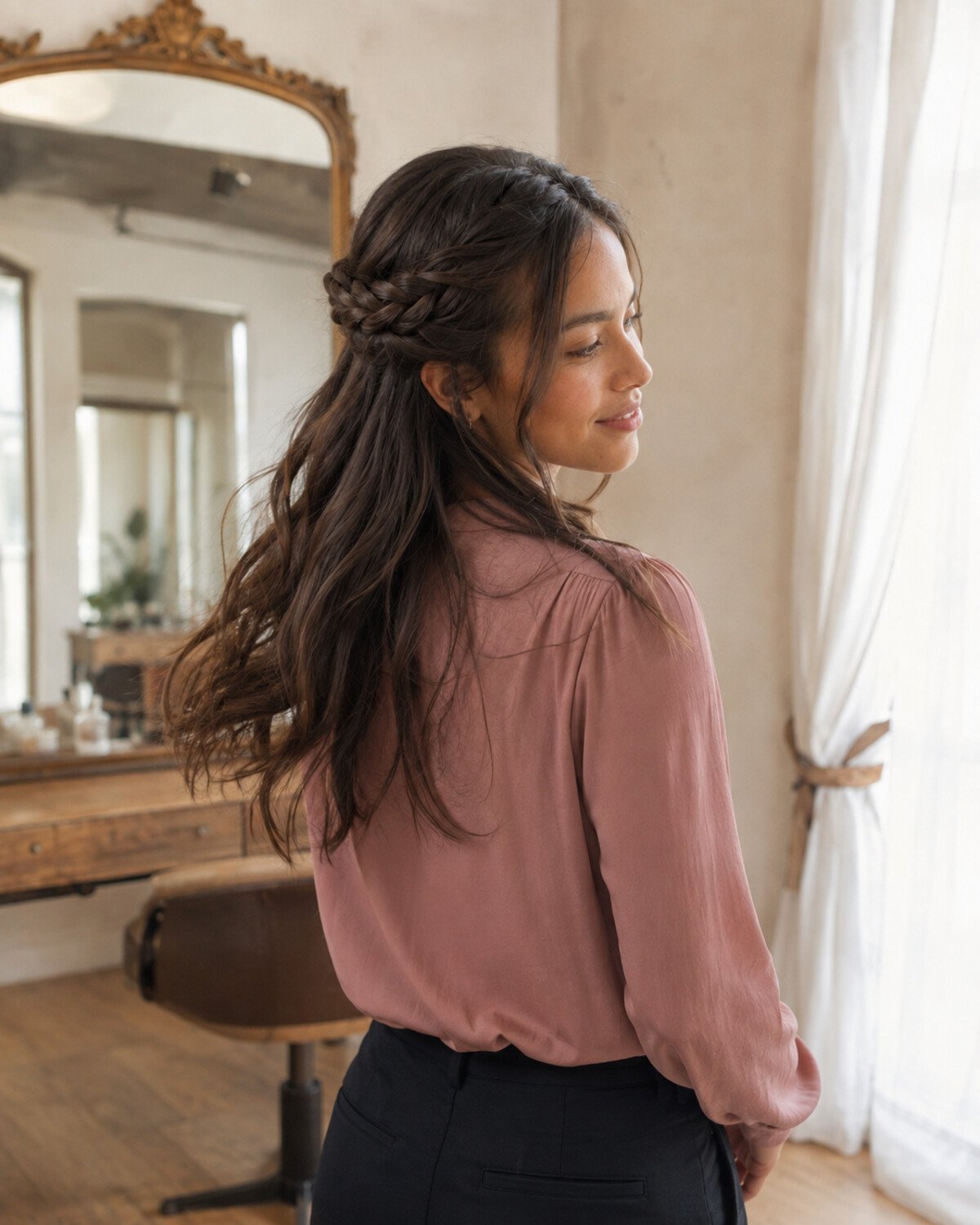
Check the Style From Every Direction
A halo braid is often designed from the back, but it must also feel balanced from the front and profile.
Before finishing, look at the height around the crown, the softness near each temple and the transition between the braid and loose hair. Turn your head naturally to confirm that the style remains secure without feeling restrictive.
Avoid hiding every flyaway beneath heavy spray. A flexible finish allows the braid to move with the wearer and supports the relaxed mood that makes this revival feel current.
The most modern halo braid is romantic without looking precious: detailed enough to feel special, yet soft enough to wear beyond the event itself.