
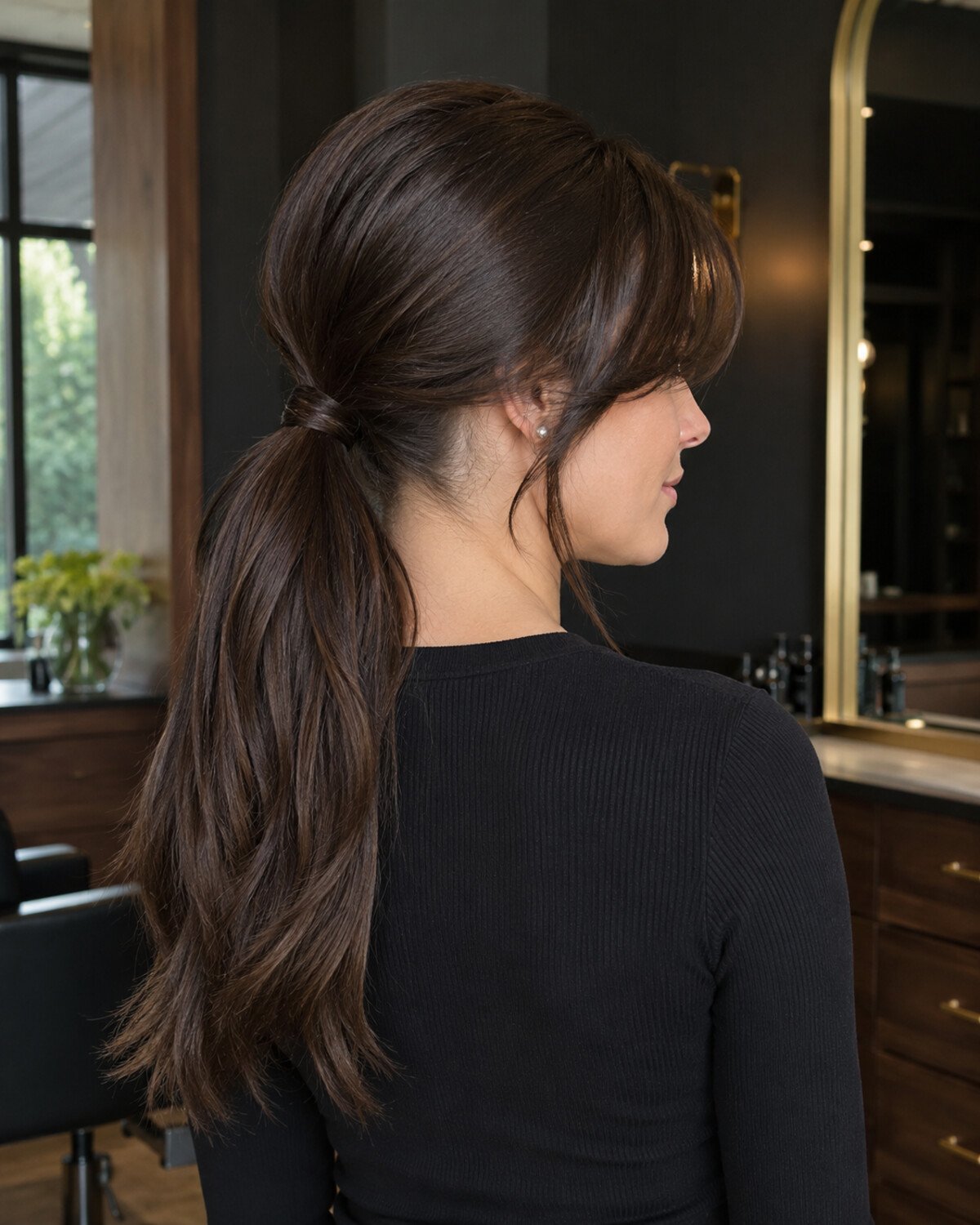
Why Ponytails Reveal What a Finished Blowout Can Hide
A polished loose finish is only one position in which a client will wear her extensions. As soon as she gathers the hair into a ponytail, changes her part or twists it into a relaxed updo, the direction of the natural hair changes—and so does the coverage over the installation.
That makes the ponytail test a practical final check for extension professionals. It is not a promise that every installation should support every high, tight style. It is a way to confirm that the agreed everyday styles look discreet, feel comfortable and maintain believable density from several angles.
The test should be part of the consultation as well as the finish. Ask where the client normally places her ponytail, whether she leaves face-framing pieces out and how often she tucks the sides behind her ears.
Do Not Judge Coverage in One Static Position
Hair arranged for a back-view photograph can conceal a short natural layer, a sudden density change or an area that becomes visible when the head turns. Before styling, observe how the client gathers her own hair without coaching her into a salon-perfect motion.
Check the temples, area behind the ears, crown and nape. These mobile zones respond differently when the hair is pulled upward or toward the centre. A placement that disappears when the hair hangs straight down may require a different plan for someone who wears a low ponytail every day.
Coverage and comfort should be evaluated together. If a style requires force, extreme tension or carefully placed strands to hide the installation, it is not a useful real-life test.
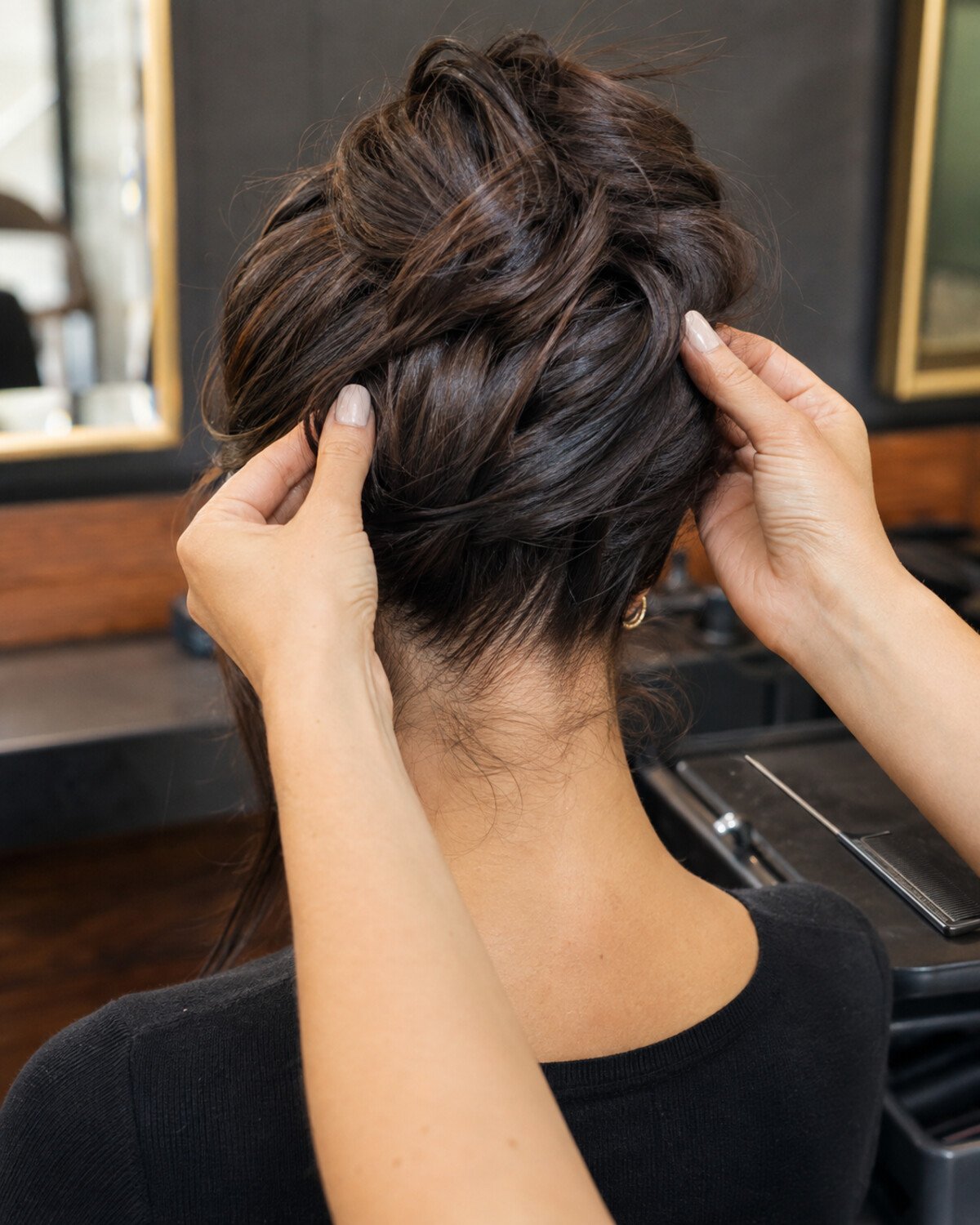
Work Through the Head in Zones
A structured review keeps the stylist from focusing only on the most photogenic area:
- Perimeter: confirm that the natural hairline remains soft and undisturbed.
- Temples and sides: watch what becomes exposed when the hair is tucked or swept back.
- Crown: change the part and look for enough natural coverage in motion.
- Nape: check that a relaxed ponytail does not create an abrupt shelf or concentrated weight.
The appropriate extension method and placement depend on the client’s natural density, head shape and requested styles. Premium hair supports a refined result, but the invisibility comes from the stylist’s assessment and execution.
Test the Blend Without a Styling Disguise
Uniform curls can temporarily merge different lengths. During quality control, allow the hair to settle into a softer finish and separate a few sections with the fingers. The natural layers should connect with the added length without forming a visible ledge.
Then gather the hair gently. Look for balanced weight on both sides, a smooth transition into the ponytail and natural taper through the ends. Do not cover an issue with heavy oil or rigid spray; those products can compress flyaways while hiding useful information.
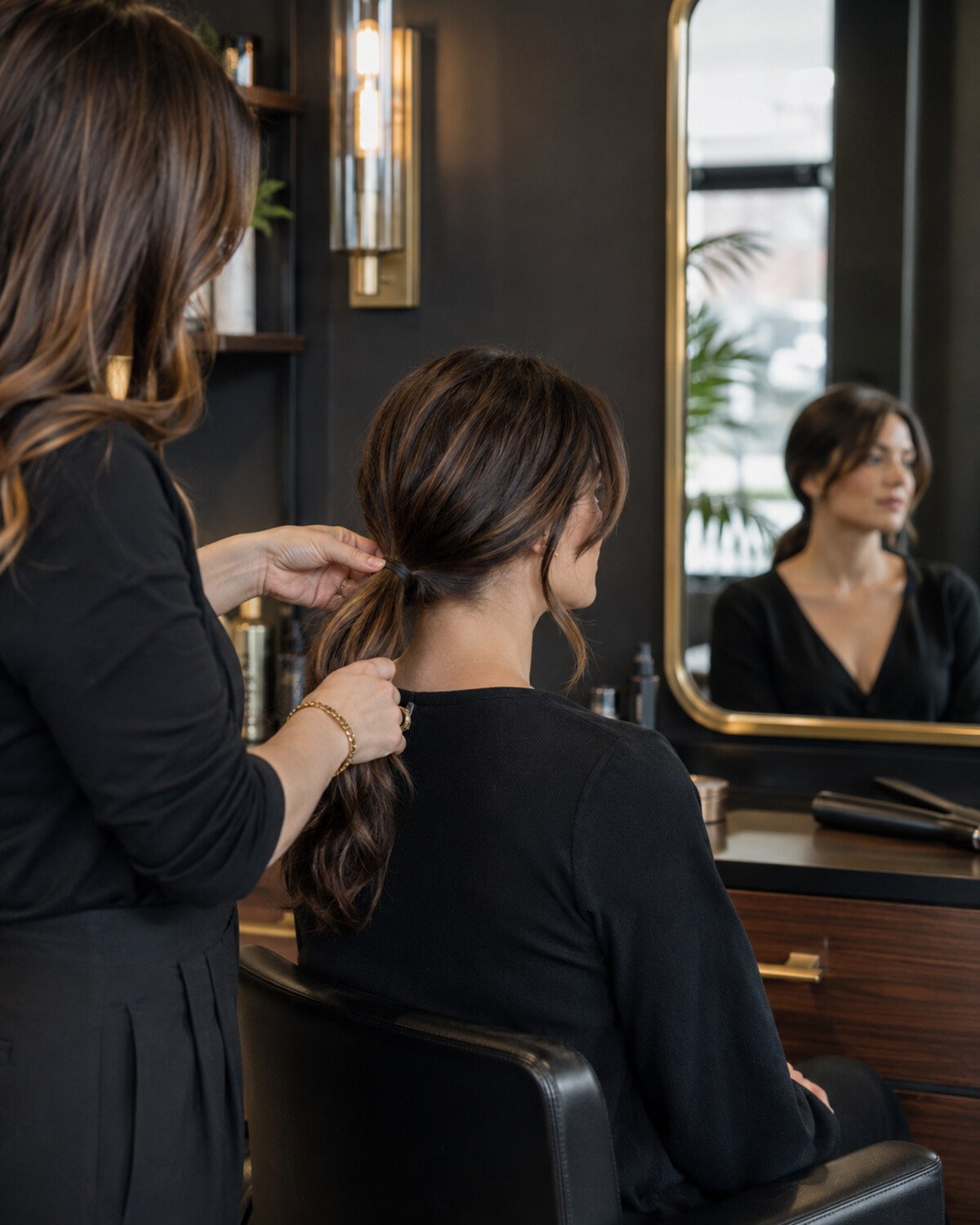
Use a Three-Style Sign-Off
Before the client leaves, review three agreed positions:
- The preferred loose style, viewed from the front, profile and back.
- A relaxed low ponytail or loose updo, created without excessive tension.
- An alternate part or side tuck that reflects the client’s normal routine.
Ask the client to recreate at least one style herself. This reveals how the installation behaves outside the stylist’s hands and provides a natural opportunity to reinforce method-appropriate aftercare.
The ponytail test is simple, but it changes the standard from “invisible in a photograph” to “considered for real life.” That is where careful placement, natural movement and stylist craft become most visible.